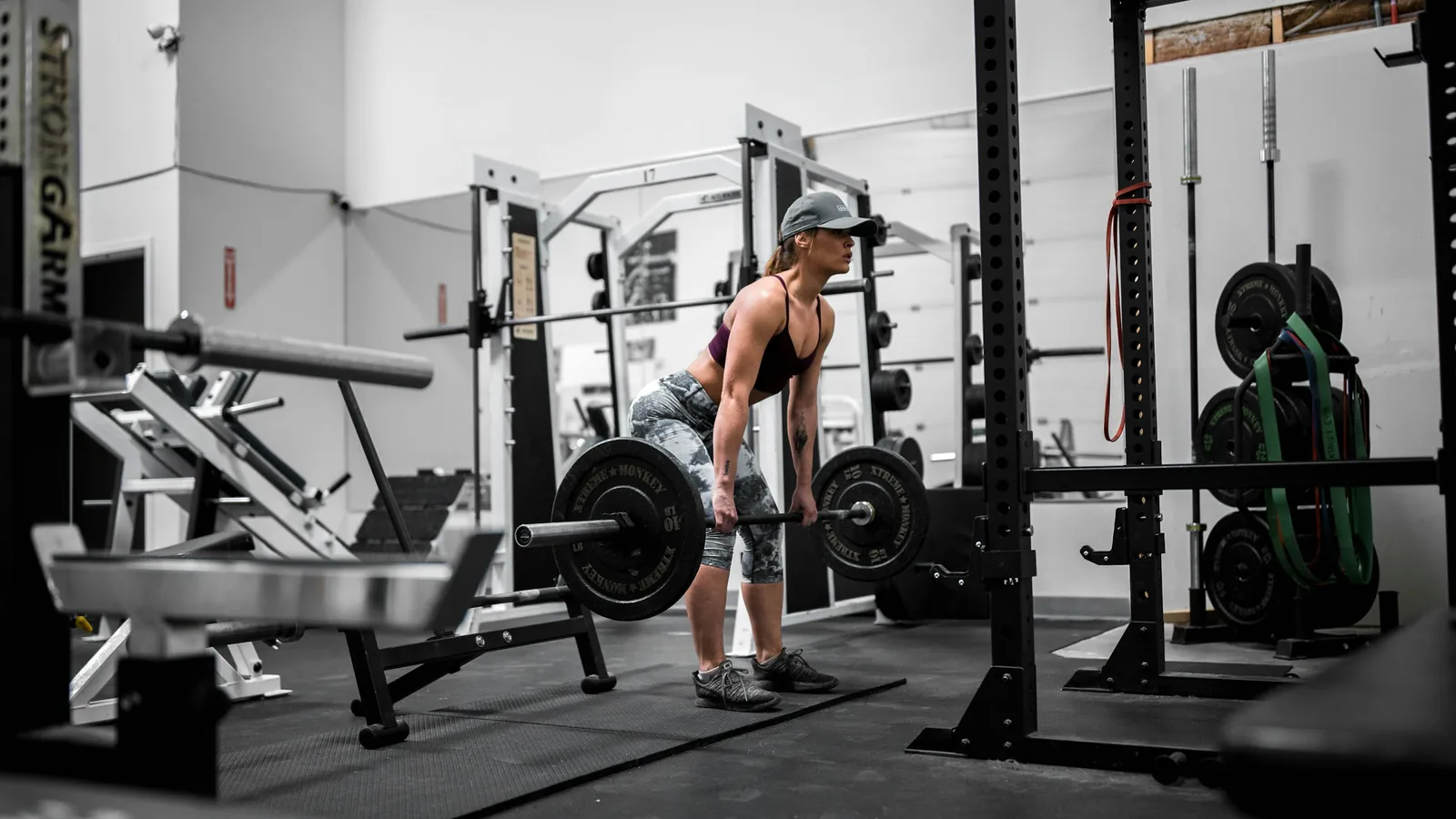
Most equipment brands sell to the person who trains. In coached training, the person who writes the programme decides a good share of what that trainee needs. So it matters that the coaching profession is not one market for kit. It is at least two.
hale reads programming on two coaching platforms that serve different ends of the profession. FitFocus is used by coaching businesses: gyms, studios, and online and hybrid coaching teams. QuickCoach is a lightweight platform used by more than 40,000 coaches worldwide, most of them independent. This page sets the same month side by side.
The short answer
In October 2026, coaching businesses on FitFocus prescribed barbell exercises at more than twice the rate of mostly independent coaches on QuickCoach: 10.0% of prescribed work against 4.5%. The back squat reached a third of FitFocus clients against an eighth on QuickCoach. Yet the movement pattern mix was nearly identical, and machines sat at about 14% on both.
10.0% vs 4.5%
barbell share of prescribed exercises, FitFocus vs QuickCoach
2.7x
back squat client reach on FitFocus (33.1% vs 12.2% of clients)
~14%
machine share of prescribed exercises on both platforms
Under 3 pts
largest gap between the platforms in any movement pattern
What this is, in one paragraph
This page compares exercises written into active client programmes on FitFocus and QuickCoach in October 2026. QuickCoach covered 232,596 prescribed exercises. FitFocus is a smaller and more concentrated base, so its figures describe direction rather than precise market shares, and no FitFocus volume is published. Equipment and pattern figures are exercise-share; movement figures are client-share, and the two are never mixed. QuickCoach is a read of mostly independent coaches, not the whole workforce. Everything is aggregated and anonymised. The full method sits at the foot of the page.
Do coaching businesses and independent coaches programme different movements?
Barely. Group every prescribed exercise by the pattern it trains and the two platforms look alike. Pull and push work are almost level, and the widest gap in any pattern is mobility, at 2.6 points.
| Pattern | FitFocus | QuickCoach |
|---|---|---|
| Pull | 18.8% | 18.3% |
| Push | 17.3% | 17.3% |
| Mobility | 11.1% | 13.7% |
| Hinge | 10.7% | 9.7% |
| Core | 9.9% | 11.0% |
| Squat | 8.8% | 7.7% |
| Lunge | 3.9% | 4.9% |
| Conditioning | 3.9% | 4.6% |
| Carry | 0.5% | 0.8% |
Share of prescribed exercises (exercise-share), October 2026. Exercises that did not map to a single pattern sit outside the table.
That is the first finding, and it is easy to skip past. Coaching businesses and independent coaches agree on what a balanced programme contains. Where they part company is in how it gets loaded.
Where the equipment mix splits
Barbell exercises make up 10.0% of prescribed work on FitFocus, more than double the 4.5% on QuickCoach. Cable work is close to double as well. On QuickCoach the gap runs the other way for portable kit: bodyweight work is 19.6% against 15.1%, bands are twice as common and suspension trainers far more so.
| Equipment named | FitFocus | QuickCoach |
|---|---|---|
| Bodyweight | 15.1% | 19.6% |
| Machine | 13.7% | 13.9% |
| Dumbbell | 11.4% | 12.5% |
| Cable | 11.4% | 6.3% |
| Barbell | 10.0% | 4.5% |
| Band | 2.3% | 4.8% |
| Kettlebell | 0.7% | 1.4% |
| Suspension trainer | 0.1% | 1.0% |
| No equipment named | 27.3% | 28.6% |
Share of prescribed exercises (exercise-share), October 2026. Equipment is counted only when the exercise name states it, so over a quarter of exercises on both platforms name no implement.
Machines are the one category that sits level, at about 14% on both. Hold on to that row. It is the clue to what is actually driving the split.
The same split shows up movement by movement
The heavy barbell lifts carry the biggest gaps. A third of FitFocus clients have a back squat in their programme against an eighth on QuickCoach, and the deadlift reaches more than twice the share. Gym-floor machines such as the lat pulldown and leg extension sit ten points or more higher.
| Movement | FitFocus | QuickCoach | Gap (pts) |
|---|---|---|---|
| Back squat | 33.1% | 12.2% | +20.9 |
| Deadlift | 35.6% | 16.8% | +18.8 |
| Lat pulldown | 51.1% | 38.2% | +12.9 |
| Leg extension | 34.7% | 24.6% | +10.1 |
| Leg press | 26.6% | 20.8% | +5.8 |
| Hip thrust | 31.3% | 25.8% | +5.5 |
| Bench press | 36.2% | 31.7% | +4.5 |
| Row | 64.1% | 59.7% | +4.4 |
| Shoulder press | 26.9% | 22.7% | +4.2 |
| Romanian deadlift | 33.4% | 34.9% | -1.5 |
| Plank | 13.6% | 16.0% | -2.4 |
| Push-up | 17.0% | 21.1% | -4.1 |
| Goblet squat | 15.2% | 21.3% | -6.1 |
Share of clients prescribed each movement at least once (client-share), October 2026. Rows cannot be added together. Only movements prescribed across a broad spread of FitFocus businesses are shown, so no single gym's programme drives the comparison.
The movements that lean the other way work anywhere: the goblet squat, the push-up and the plank. The Romanian deadlift, which can be loaded with a barbell or a pair of dumbbells, is close to level.
Our read on why
This section is interpretation. The platform data shows what coaches prescribe; it cannot show why, and the factors below probably work together in ways the data cannot separate.
The platform shapes the programme
FitFocus includes RPE-based progression in its programme builder, so a coach can move a client's squat or deadlift forward by effort rather than by guessed loads, and clients can send training footage to their coach through the timeline for form review. Those are the tools a coach uses to progress a technical barbell lift, including with clients they rarely see in person. QuickCoach is built for fast, simple programme delivery, and coaches on it lean towards movements that are easy to prescribe and hard to get badly wrong.
Coaches choose tools that fit how they coach
The effect probably runs both ways. Coaches who build around the squat, deadlift and bench press are more likely to pick a platform with progression and video review built in, and the platform then makes that style easier to run at scale. The barbell share reflects the coaches as much as the tool.
Certainty about the equipment
Not every FitFocus business coaches in its own gym, but many of its coaches know where their clients train. A remote coach on QuickCoach often does not know what a client can reach from one week to the next. A barbell back squat assumes a rack and plates; a goblet squat needs one dumbbell. When the kit is uncertain, coaches write movements that survive the uncertainty. The level machine share fits this reading, since a machine programme only gets written when gym access is already assumed.
Different services, different clients
Coaching businesses tend to sell premium, higher-touch services, and some work with athletes. Independent online coaches serve a broader general-population base, where adherence and access count for more than maximal strength. The programming styles behind that difference are segmented in Six Coaching Archetypes.
What this page does not claim
- The figures describe what coaches prescribed, not what clients completed or bought. No purchase or brand use was observed.
- FitFocus is a smaller, concentrated base. Its figures show direction, not precise market shares, and no FitFocus volume is published or estimated here.
- QuickCoach is a read of mostly independent coaches on one platform, not the whole coaching workforce.
- The "why" section is hale's interpretation and is not derived from platform data.
- Nothing here is training advice. Which lifts suit a given client is a coaching decision.
What this means for brands
The profession is one market for training ideas and two markets for equipment. Business-led, higher-touch coaching runs heavier on barbells, racks, cable stations and plate-loaded machines, and on software that helps progress them. Independent coaching runs on what a client can own or carry, from dumbbells and bands to suspension trainers and bodyweight, often bought on the coach's advice.
A brand selling into either segment should know which model its customers are coached under, because the professional writing the programme is shaping the shopping list. That is the recommendation-layer point set out in the recommendation layer, applied to kit rather than supplements. For how a product earns a place with the professionals making those calls, see the practitioner layer playbook. And for the session block where recovery tools get prescribed in the same way, see the prep block report.
Machines are the exception worth tracking. Equal weight on both platforms suggests gym access, rather than coaching model, decides that category, so a machine brand's real audience is the facility, whichever coach writes the plan.
One month is also a snapshot. How the QuickCoach side of this comparison moved from August to October, with barbell work rising every month, is tracked in what a three-month movement tracker shows.
See which coaching market your brand is winning
hale tracks how the coaches who write the programme see your category and your brand, alongside the clients who train on it, month by month and against your competitive set.
Research partners can reach us at research@halehealth.io.
Where these figures come from
How we got this number
Source. Exercises written into active client programmes on FitFocus and QuickCoach in October 2026, both platforms behind the hale panel. QuickCoach covered 232,596 prescribed exercises; its October pattern, equipment and movement figures match QuickCoach's own living report, What Do Coaches Actually Program?. FitFocus figures were checked by hand against the October 2026 platform export.
Definitions. Exercise-share is the share of all prescribed exercises in the month, used for the pattern and equipment tables. Client-share is the share of clients with at least one prescription of a movement in the month, used for the movement table; it cannot be added across rows. Each exercise name is resolved to a canonical movement and classified by pattern and named equipment with the same rules on both platforms. Equipment is counted only when the name states it, and unnamed implements stay unspecified rather than inferred. QuickCoach's separate equipment report counts share of programmes, a different denominator, so its figures do not sit beside these.
Scope. FitFocus serves coaching businesses, a smaller and more concentrated base than QuickCoach, so its figures describe direction. FitFocus movements prescribed by only a handful of businesses are excluded from the movement comparison. QuickCoach is a QuickCoach-skewed read of mostly independent coaches, not the whole workforce. No split by business size, coach experience, roster size or country is published. How every hale figure is produced is set out in how hale measures.
Privacy. Everything is aggregated and anonymised. No individual coach, business, client or programme is identifiable, and no personally identifiable information is included.
Frequently asked questions
Do coaching businesses programme more barbell lifts than independent coaches?
Yes. In October 2026, barbell exercises made up 10.0% of prescribed work on FitFocus, the platform for coaching businesses, against 4.5% on QuickCoach, where most coaches work independently. The back squat reached 33.1% of FitFocus clients against 12.2% on QuickCoach.
Do coaching businesses and independent coaches programme different movement patterns?
Not much. Pull work was 18.8% of prescribed exercises on FitFocus and 18.3% on QuickCoach, and push work was 17.3% on both. No movement pattern differed by more than 2.6 points between the two platforms in October 2026.
What equipment do online coaching clients need?
Mostly portable kit. On QuickCoach in October 2026, bodyweight exercises made up 19.6% of prescribed work, dumbbells 12.5% and bands 4.8%, all higher than on FitFocus. Machines were level at about 14% on both platforms.
Published November 2026. Figures are aggregated and anonymised reads of October 2026 programming on FitFocus and QuickCoach. hale is a health-tech holding company; its coaching platforms, QuickCoach and FitFocus, form the network behind this research. To see what this looks like for your brand and competitive set, start a conversation or reach us at research@halehealth.io.
How hale research works: the panel, the instruments and the privacy rules.