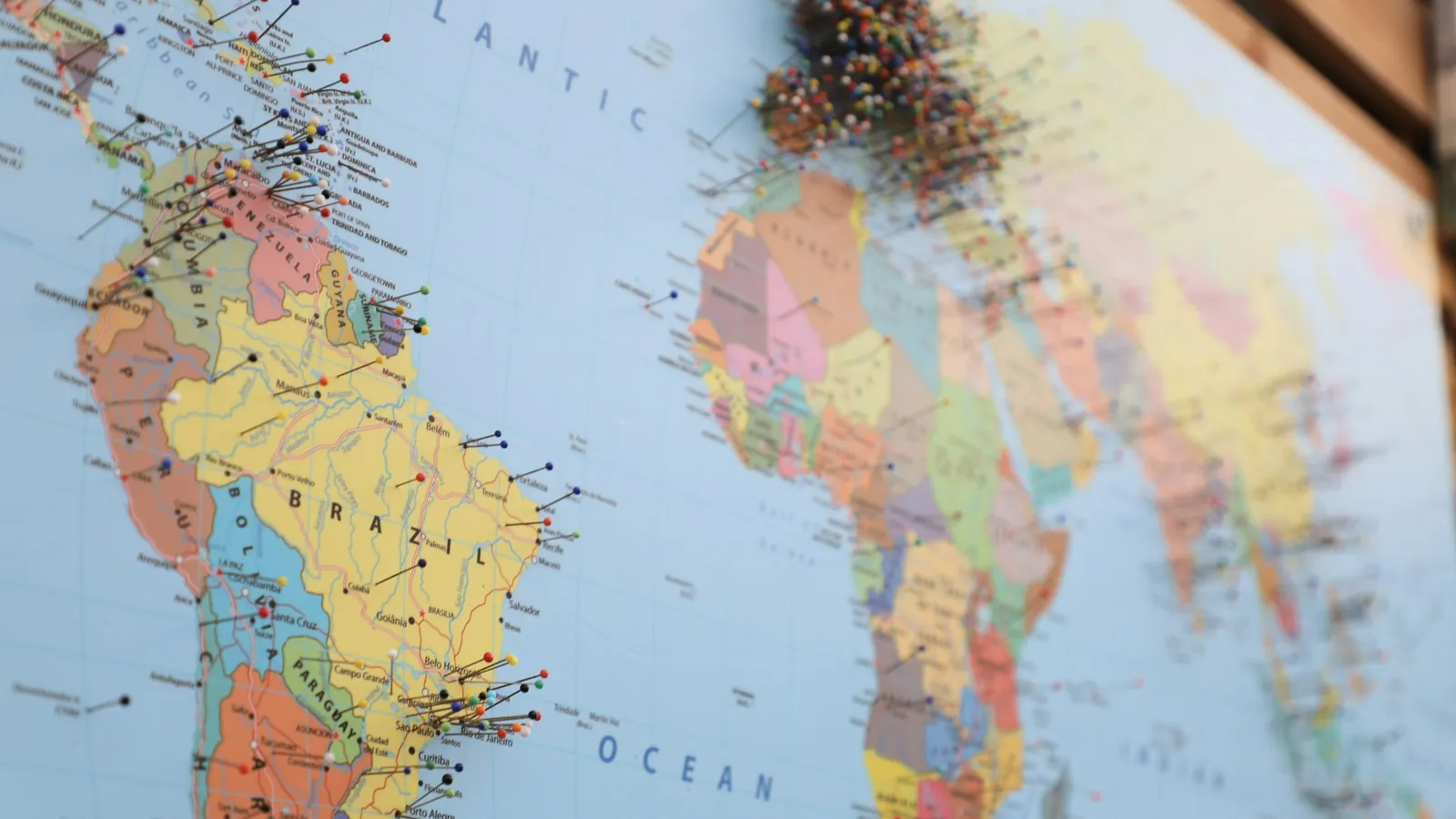
The health and wellness workforce is not local. The professionals who shape what clients buy operate across more than 110 countries, their clients are reached across 152, and in 42 of those countries clients are being coached with no local coach present at all. That gap between where the professionals are and where the demand sits is the cross-border footprint this report is about, and it is the kind of thing a general-population tracker structurally cannot see.
hale runs the network this workforce lives on. The ecosystem serves more than 40,000 fitness and health professionals and the clients they guide, and for this report we read account-level geography across a 90-day window in 2026, paired with a voluntary practice-profile survey. The question was simple: where are the professionals, where are their clients, and what sits between the two?
The short answer
The hale ecosystem spans more than 40,000 coaches active in over 110 countries, with clients reached across 152. In 42 of those countries, clients are being coached with no local coach present at all. That is the cross-border demand gap, and it is the number a general-population tracker structurally cannot see, because it needs both sides of the panel.
42
countries where clients are coached with no local coach present
152
countries where clients are reached
110+
countries with active coaches
40,000+
fitness and health professionals across the hale ecosystem
What this is, in one paragraph
This is a read of a professional network, not a general-population poll. Findings combine account-level geography across a 90-day window in 2026 with a voluntary practice-profile survey of active users (2,184 valid responses, fielded March to September 2026), drawn from the hale ecosystem of more than 40,000 professionals and their clients. Everything is aggregated and anonymised, with no individual coach, client or business identifiable. The full method sits at the foot of the page.
Why the gap is the tell
A single-sided tracker sees one market at a time. It can tell you how many coaches work in a country, or how many consumers live in one, but it cannot see the space between the two. The cross-border gap only shows up when you measure both sides of the network at once, which is exactly what the hale panel does.
That gap is real and it is large. In 42 countries, clients are being coached with no local coach present at all. A recommendation made by a professional in one market routinely lands with a client in another. The professional layer is not a local phenomenon, and the demand it shapes does not stop at a border. What that distance between the workforce and the demand means for a brand, and how to read it, is the subject of the geographic demand gap explainer.
What the footprint does not say
One honest caveat before the interpretation. This is a read of the hale ecosystem, which skews towards independent, digitally engaged practitioners on the QuickCoach and FitFocus platforms. It is not a census of the entire non-clinical health and wellness workforce. The footprint is a strong signal about the population we measure, and a directional one about the workforce as a whole. We say that plainly because the point of the report is credibility, and credibility does not survive overclaiming.
The footprint also does not tell you which brands win inside it. It tells you the workforce is global, measured, and cross-border. Which brands the professionals choose, and how that changes month to month, is the question continuous brand tracking answers for one brand and its competitive set at a time.
Why this matters for a brand
For a brand, the footprint matters because it changes where the category is actually won. The people shaping decisions are not concentrated in a handful of English-speaking markets, and their influence does not stop at a border. A brand that tracks only its home market is watching one corner of a network that spans 152 countries.
The full case for the layer sits in the recommendation layer research. For why the professional and the consumer have to be read together, rather than one standing in for the other, see Both Sides of the Sale. For the annual read on the demand side these professionals shape, see the State of the Health and Wellness Consumer 2026. For the working-day rhythm that marks this workforce as professional, see the professional-workforce behaviour signal. For the standalone data report on whether professionals actually influence buying, see Do Fitness Professionals Influence What Clients Buy?.
See your brand across the markets that shape it
If your category is being chosen, or quietly skipped, by professionals in one market while demand sits in another, a single-country tracker will be the last thing to tell you. hale measures perception among coaches and their clients, continuously, across the markets you care about.
Methodology and limitations
How we got this number
Source. An internal research project across the hale ecosystem, which serves more than 40,000 fitness and health professionals and their clients. Findings combine account-level geography across a 90-day window in 2026 with a voluntary practice-profile survey (2,184 valid responses fielded March to September 2026, with the rate holding between 64% and 74% in every monthly cohort).
Definitions. A country counts as having active coaches when at least one coach in the ecosystem operates there. A country counts as reached when at least one client is coached there. The headline figure, 42, is the count of countries where clients are coached with no local coach present at all, the cross-border demand gap.
Scope. This is a read of a professional network, not a census of the entire non-clinical workforce. The ecosystem sample skews towards independent, digitally engaged practitioners, so figures should be read as a directional baseline. Country-level crosstabs sit beneath this topline and are held as part of hale's brand-tracking work, available to research and commercial partners rather than published here. Figures are rounded.
Privacy. Everything is aggregated and anonymised. No individual coach, client or business is identifiable, and no personally identifiable information is included.
Frequently asked questions
What is the cross-border coaching footprint?
It is the geographic reach of the health and wellness workforce, read from both sides of the hale network. Coaches are active in over 110 countries, clients are reached across 152, and in 42 of those countries clients are coached with no local coach present at all.
Why does the cross-border gap matter for brand research?
Because it shows where demand is actually shaped. A recommendation made in one market routinely lands with a client in another, so a brand that tracks only its home market misses the markets where its category is being won. The gap is a number a general-population tracker structurally cannot see.
How does hale measure the coaching footprint?
hale reads account-level geography across a 90-day window in 2026, paired with a voluntary practice-profile survey of 2,184 valid responses, drawn from the ecosystem of more than 40,000 professionals and their clients. Everything is aggregated and anonymised.
What does the footprint mean for a wellness brand?
It means the professionals who shape what clients buy are global, and their influence crosses borders. The people shaping decisions are not concentrated in a handful of English-speaking markets, and a brand that wants to see the whole category has to measure the professional and the consumer together.
Published August 2026, drawn from an internal research project across the hale ecosystem of 40,000+ professionals and their clients. hale is a health-tech holding company; its coaching platforms, QuickCoach and FitFocus, form the network behind this research. To see what the cross-border footprint looks like for your brand and your competitive set, start a conversation or reach us at research@halehealth.io.
How hale research works: the panel, the instruments and the privacy rules.