The Prep Block: Where Recovery Enters the Training Session

Recovery and longevity is usually sold as something clients do on their own time. In coached training it starts in the first ten minutes of the session, prescribed by the coach.

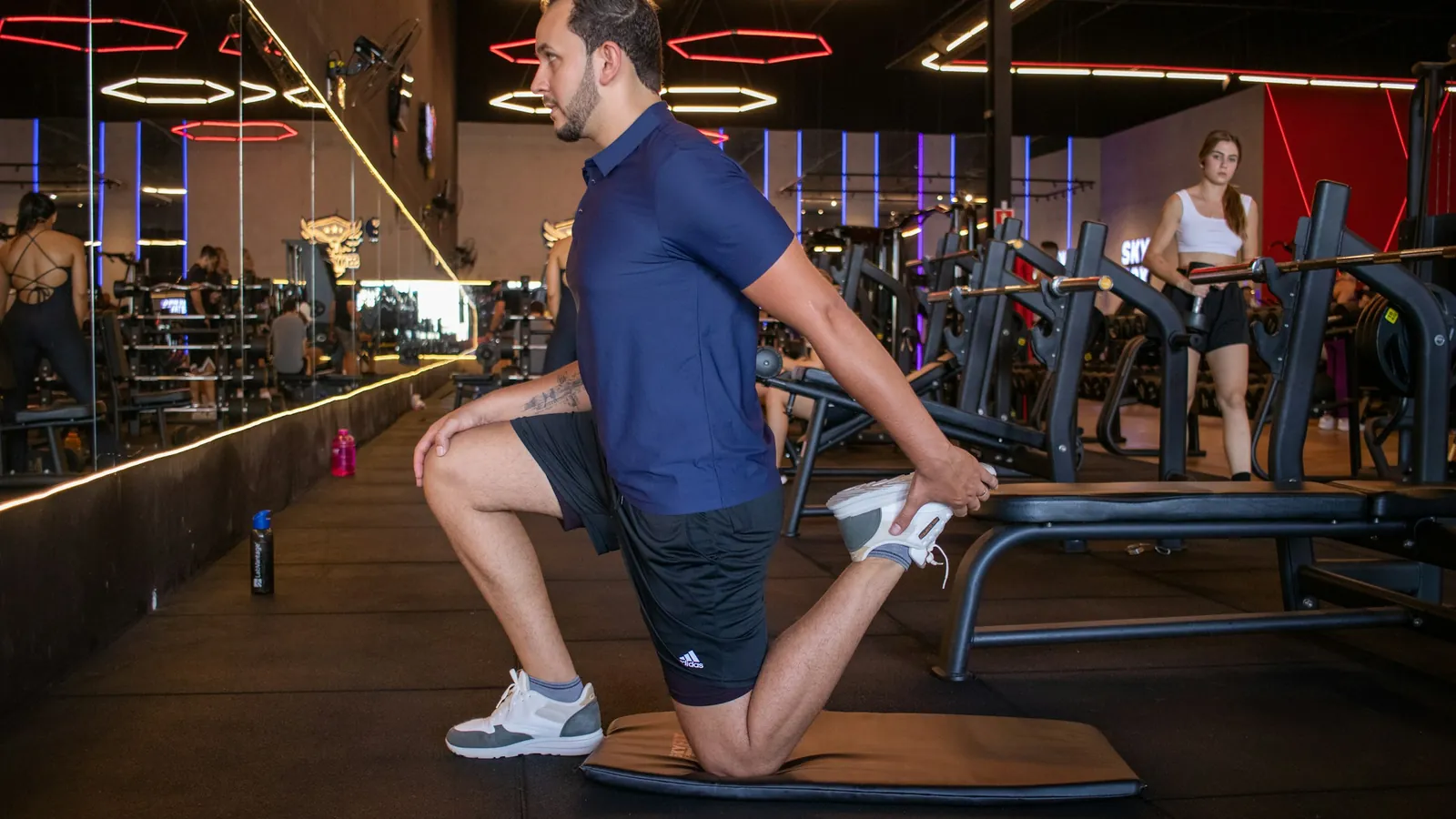
A man in a gym holding a kneeling quad stretch on a mat before training, the warm-up work a coach programmes

Photo by Gilson Gomes on Unsplash

Recovery and longevity is usually pitched at the consumer: a foam roller for the living room, a massage gun after a run. The programming data shows a different entry point. In coached training, recovery-style work is increasingly written into the session itself, as a prep block the coach prescribes before anything is loaded.

FitFocus read how physio-led coaches build that block and how far the habit has spread. This page reads those findings from the brand side.

The short answer

Warm-up, mobility and activation work is close to one in ten programmed movements on FitFocus, and nearly four in ten practices build a prep block. Physio-led coaches put it first in every session: soft tissue, activation, controlled patterns, joint prep, then load. In coached training, recovery tools are equipment the coach prescribes for that block.

~1 in 10

programmed movements is warm-up, mobility or activation work

~4 in 10

practices build a dedicated prep block

4

buckets in a physio-led prep block, before any working set

26%

of QuickCoach coaches also assign a mobility or stretching habit

What this is, in one paragraph

This page reads two FitFocus reports published in October 2026, How Rehab and Physio-Led Coaches Program and its companion on warm-ups and prehab, both drawn from approximately 70,000 workouts logged between 2023 and 2026. The mobility habit figure is quoted from QuickCoach's July 2026 Habit Assignment Report and counts coaches rather than movements. FitFocus is a premium white-label platform whose practices lean established and higher-priced, so the data speaks strongly for that segment and directionally for coaching overall. One external study is cited and attributed. The product categories each bucket uses are hale's reading. Everything is aggregated and anonymised. The full method sits at the foot of the page.

What the prep block contains

Physio-led practices open every session with the same four buckets, in order, before a single working set. Load is then added when movement quality holds rather than when the calendar says so, so the prep block doubles as a screen.

BucketWhat coaches programmeEquipment it uses
Soft-tissue releaseFoam rolling and trigger-ball work through the quads, glutes, TFL, lower back and pecsFoam rollers, massage and trigger balls, percussion tools
ActivationBand pull-aparts, clamshells, lateral band walks and glute bridgesResistance bands and mini-bands
Controlled patternsDead bugs, bird dogs and cat-cow, for core control and spinal awarenessMats and floor equipment
Joint preparationScapular, ankle and hip work, band dislocates and thoracic extensionsBands, mobility sticks and dowels

Buckets and exercises as published in FitFocus, How Rehab and Physio-Led Coaches Program (October 2026). The equipment column is hale's reading.

How far it has spread

Prep work is no longer a clinic-only habit. Across FitFocus, it is close to one in ten programmed movements, and nearly four in ten practices build a dedicated prep block. Rehab and physio-led practices are a growing slice of the coaching mix, as physiotherapists widen their scope from treatment into ongoing training. That shift is part of the demand picture the annual read on the state of the wellness consumer follows from the professional side. The source series also found the prep-first sequence to be one of the clearest dividing lines between coaching styles, set out in Six Coaching Archetypes.

The same habit shows up between sessions on a different platform. On QuickCoach, 26% of coaches assign a mobility or stretching habit, as covered in Between Sessions. Two platforms and two different measures point the same way, with coaches bringing recovery work inside the coaching relationship.

The prep block only works if clients do it

The source names the prep block's weakness plainly. It is the least glamorous part of a session and the first one a general programme cuts. A systematic review of the FIFA 11+ warm-up, cited in the source, found that consistency of use mattered more than which exercises were on the sheet. The market point follows: a block only does its job if clients get through it every session.

Coaches already know what to programme. Their harder problem is getting clients through those ten minutes, and products that make the prep block quicker or more satisfying help solve it.

Recovery brands should sell into the session

  • In coached training, recovery tools are prescribed equipment for a specific block, so a brand positioned only as at-home self-care misses where coaches put the work.
  • Physio-led coaches are the standard-setters. They built the habit and the rest are borrowing it. Their bar is clinical defensibility, and their adoption is what the wider market follows.
  • The prep block depends on consistency. A product that helps a client get through it every session fits the coach's problem better than one that only claims a better result.
  • Track the professional view of the category. Whether coaches see a brand as part of the prep block or as a consumer gadget is a consideration question consumer research cannot answer. It is the two-sided read set out in Both Sides of the Sale.

What this page does not claim

  • The equipment column is hale's reading of what each bucket needs. Purchases and brand use weren't observed.
  • This page gives no clinical advice. Manual therapy and injury treatment sit outside a coach's scope, as the source notes.
  • The two platform figures measure different things. FitFocus counts programmed movements and practices; QuickCoach counts coaches assigning a habit. They point the same way but are not interchangeable.
  • The source is approximately 70,000 workouts logged on FitFocus between 2023 and 2026. FitFocus is a premium white-label platform, and its practices lean established and higher-priced. The data speaks strongly for that segment and directionally for coaching overall.

Find out where your brand sits in the session

hale measures how the coaches who programme the prep block see your category and your brand, alongside the clients who use it, continuously and against your competitive set.

Research partners can reach us at research@halehealth.io.

Book a demo

Where these figures come from

How we got these numbers

Source. FitFocus, How Rehab and Physio-Led Coaches Program: Prep First, Load Second and its companion Do Coaches Programme Warm-Ups? (October 2026), quoted without re-derivation, both drawn from approximately 70,000 workouts logged on FitFocus between 2023 and 2026. The mobility habit share is quoted from QuickCoach, The Habit Assignment Report (July 2026). FitFocus and QuickCoach are platforms behind the hale panel.

External research. The consistency finding is from Patel and Shah, a systematic review of the FIFA 11+ warm-up, Cureus (December 2025), cited as published research and not hale's own finding. This page makes no injury-prevention claim.

Definitions. The movement-share figure counts programmed movements: warm-up, mobility and activation work as a share of all movements written into a plan (about 9%). The practice-share figure counts practices: the share that build a dedicated prep block (nearly four in ten). The 26% is a coach-share on a different platform, counting coaches who assign a mobility or stretching habit at least once. The three denominators are not interchangeable. The 70,000 is a workout count, never a coach count.

Scope. The source is approximately 70,000 workouts logged on FitFocus between 2023 and 2026. FitFocus is a premium white-label platform, and its practices lean established and higher-priced. The data speaks strongly for that segment and directionally for coaching overall. The equipment column is hale's interpretation. How every hale figure is produced is set out in how hale measures.

Privacy. Everything is aggregated and anonymised. No individual coach, client or business is identifiable, and no personally identifiable information is included.

Frequently asked questions

Do fitness coaches programme warm-ups?

Many do. On FitFocus, warm-up, mobility and activation work is close to one in ten programmed movements, and nearly four in ten practices build a dedicated prep block before the working sets.

What is a prep block?

A structured opening to a training session. Physio-led coaches run four buckets in order: soft-tissue release, activation, controlled movement patterns and joint preparation, then add load when movement quality holds.

Why does the prep block matter to recovery brands?

Because it brings recovery work inside the coached session. Foam rollers, trigger balls and resistance bands become prescribed equipment for a specific block, chosen by a coach, rather than a consumer's optional extra.


Published October 2026. Figures are first published in FitFocus's How Rehab and Physio-Led Coaches Program and Do Coaches Programme Warm-Ups? (October 2026) and QuickCoach's The Habit Assignment Report (July 2026), aggregated and anonymised. The FIFA 11+ review is external research, attributed rather than claimed. hale is a health-tech holding company; its coaching platforms, QuickCoach and FitFocus, form the network behind this research. To see what this looks like for your brand and competitive set, start a conversation or reach us at research@halehealth.io.

Keep reading: Six Coaching Archetypes · Between Sessions · What Coaches Measure

How hale research works: the panel, the instruments and the privacy rules.
Share this article

LinkedIn Email

Keep reading

A personal trainer guiding a client through a leg press in a gym, the professional who shapes purchase decisions in health and fitness Research

The Recommendation Layer

Roughly seven in ten coaches recommend supplements to clients. The professional layer where brands get chosen before the consumer ever weighs in.

August 20, 2026 5 min read
A coach guiding a client through a dumbbell lunge during an at-home session, the two-sided relationship behind a purchase Research

Both Sides of the Sale

Perception forms with the professional and confirms with the consumer. Why measuring one side leaves you a step behind the decision.

August 20, 2026 5 min read
Supplement capsules and a serum bottle arranged on a white surface in a minimalist studio shot, the wellness products brand tracking measures Brand tracking

What Is Brand Tracking? A Guide for Wellness Brands

What brand tracking is, what it measures, and why health and wellness brands need the continuous, not the annual.

August 20, 2026 6 min read
A young man discussing brand strategy with colleagues around sticky notes on a glassboard, the planning behind a growing brand Brand tracking

Brand Building in Health and Wellness: The Complete Guide

How brands actually grow, per the research: mental availability, distinctive assets and the occasions that trigger choice, applied to health and wellness.

August 20, 2026 8 min read
A team sticking colourful notes on a glass board in a modern office, brainstorming the strategy behind a brand Playbooks

Brand vs Performance Marketing for Wellness Brands

What brand and performance marketing each do, what the 60/40 split really says, and how to measure the brand half of the budget.

August 21, 2026 7 min read
Three bottles of vitamins beside a plant, the supplement category at the centre of the wellness consumer read Research

The State of the Health and Wellness Consumer 2026

The annual read on the demand side: what the wellness consumer is buying, and the professional layer that shapes it before the shopper decides.

August 22, 2026 7 min read
A personal trainer guiding a client through a workout in a gym, the professional who shapes what clients buy in health and fitness Research

Do Fitness Professionals Influence What Clients Buy?

The data on whether coaches and trainers actually influence what clients buy: roughly seven in ten recommend supplements, and the pattern is global.

August 24, 2026 6 min read
A fitness coach talking with a client during a gym session, the professional recommendation that shapes what clients buy Research

Word of Mouth in Fitness: Why Coach Recommendations Beat Ads

Why a coach's recommendation beats an ad, how word of mouth spreads in fitness, and why it can be measured like any channel.

August 26, 2026 7 min read
A wellness brand team reviewing brand health metrics on a laptop in a bright office, the numbers that show how a brand is remembered and chosen Brand tracking

The Brand Health Metrics That Matter for Wellness Brands

Which brand health metrics matter most for wellness brands, how to read them together, and the professional layer most trackers miss.

August 28, 2026 7 min read
A fitness professional coaching a client during a daytime session, the working-day rhythm that marks the health and wellness workforce Research

The Professional-Workforce Behaviour Signal

The behaviour signal that marks the health and wellness workforce as professionals, not hobbyists: sessions concentrated through the working day, under 2% overnight.

August 29, 2026 6 min read
A world map with connection lines spanning continents, the cross-border footprint of the health and wellness workforce Research

The Global and Cross-Border Coaching Footprint

The cross-border footprint of the health and wellness workforce: coaches active in 110+ countries, clients reached across 152, and 42 countries served with no local coach present.

August 30, 2026 6 min read
A supplement shelf stocked with protein tubs and vitamin bottles, the categories coaches recommend most Research

What Coaches Recommend in the Supplement Category

The supplement category read through the professionals who shape it: an audit of 1,000 coaches shows training staples first, protein the most-named category, and four tiers of what gets recommended.

September 1, 2026 6 min read
A coach explaining a supplement product to a client in a gym, the professional view that forms ahead of consumer awareness Research

The Awareness Gap: What Coaches Know That Consumers Don't

The professional forms a view of your brand before the consumer does. Why that gap between the two views is the thing a consumer-only tracker cannot show you.

September 10, 2026 5 min read
A coach recommending a product to a client during a training session, the moment a share of wellness demand is decided Research

How Much Wellness Demand a Professional Decides First

A share of wellness demand is decided by a coach before a consumer ever searches. Why that share is invisible to performance dashboards, and what it means for how you read yours.

September 16, 2026 5 min read
A coach and a client talking through a training plan together in a gym, the setting where a product recommendation is made and repeated Research

Do Coaches Recommend the Same Brand, or Switch?

A coach naming your brand once is a trial. What makes the same professional come back to it, and why stickiness decides who holds a category.

September 21, 2026 6 min read
A globe with route lines arcing between continents, the geographic distance between where a category is shaped and where its buyers are Research

The Geographic Demand Gap in Health and Wellness

Where a category's demand sits and where the professionals who shape it are based are two different maps. Why the gap between them is the thing a single-sided tracker cannot show you.

October 12, 2026 5 min read
A personal trainer coaching a client through a barbell lift in a gym, the one-to-one session where a professional shapes what a client buys Playbooks

How Supplement Brands Win at the Practitioner Layer

A coach recommends what they can explain and defend. What actually earns a place in a professional's repertoire, and how to tell whether your brand holds one.

October 12, 2026 6 min read
A researcher typing on a laptop showing a dashboard of pie, bar and line charts, the method behind a published research figure Research

How We Measure: Panel, Method and the Always-On Read

The one page behind every hale figure: the panel, the instruments, the rules for what gets published, and what stays inside a tracking engagement.

October 13, 2026 6 min read
Unbranded supplement capsules grouped on a plate between a knife and fork Research

How Many Supplement Categories Do Coaches Recommend?

Recommending coaches name 2.2 supplement categories on average, and 35% name three or more. The layer hands clients a shortlist, not a single product.

October 13, 2026 5 min read
A woman at her kitchen bench on the phone with a laptop open, fitting her plan around the rest of her day Research

Both Sides of the Day: When Coaches Work and Clients Train

The first client-side figure from the hale panel: coaches work mornings, clients peak between 4pm and 8pm, and 39.5% of client sessions land after 4pm.

October 13, 2026 5 min read
Overhead view of a planner being written beside bowls of fruit, a salad and a few capsules Research

Coaches Recommend Ingredients, Not Brands

Asked what supplement has worked, 71% of coaches name an ingredient or category and fewer than 1 in 20 name a brand. The coach layer has no default brand.

October 13, 2026 6 min read
A smartwatch showing a heart-rate reading on a client's wrist Research

What Coaches Measure, and What It Means for Wearables

Steps appear in 4.9% of the tracking items coaches build, yet 44% set a daily step target. The gap shows what coaches want from a wearable.

October 20, 2026 6 min read
Two hands holding lit sparklers at dusk, marking the start of a new year Research

The Category Calendar: When Wellness Demand Moves

Coaches take on new clients on a calendar that is not the consumer one: a January wave, a long mid-year plateau and a quiet final quarter.

October 22, 2026 6 min read
A man singing into a ladle in his kitchen, the everyday hours between training sessions Research

What Coaches Prescribe Between Sessions

Seven in ten coaches assign habits beyond the workout, from food logs to sleep. Each one is a buying occasion a product can fill.

October 24, 2026 6 min read
Athletes moving between stations at an indoor Hyrox fitness race, the strength and endurance format pulling general clients towards hybrid training Research

Six Coaching Archetypes Brands Should Know

Six coaching archetypes run the professional layer, and each trusts different evidence. What that split means for how a wellness brand earns a recommendation.

October 26, 2026 7 min read